The characteristics of art making
The elements and principles of art
|
In the study design, the art elements and principles are as follows:
|

|
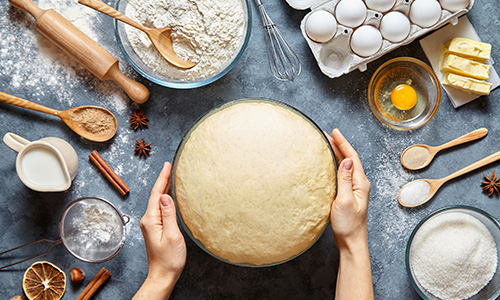
An easy way to remember the difference between the art elements and principles is to think about the process of making a cake.
So, to expand on this – when an artist makes an artwork they are using the elements (for example they may use colour and shape), but it is how they combine them together that will give different results. For example, they may use the principle of repetition. To continue the cake analogy, let's consider the artwork Boston Cremes (1962) by Wayne Thiebaud – you can view it via the following website: Thiebaud uses the art element colour (pinks, yellow, white and blue) in his painting of the slices of cake; some colours are bright while others are soft and pale. He has also used the art element shape in that we see all the plates (circles) and cake pieces (triangular forms). If we were to highlight one principle used here, it would be repetition. We can see there is a variation in use of colour in the slices in the pieces of cake; however, when we look at the artwork as a whole, there is an obvious repeated use of shape and colour across the painting with some minor variation. |
|
Can you find another artwork by Wayne Thiebaud where you are able to identify and discuss the elements and principles used? Print the picture up and annotate the image with one element and one principle used. Paste it into your Visual Arts journal. |