Welcome to Classical Studies
Introduction to Unit 3: Classical expressions
|
Unit 3 is called Classical expressions. In this unit, we’ll study different ways in which the Greeks expressed their ideas, culture and artistry. Outcome 1 As mentioned previously, the first outcome for Unit 3 focuses on epic poetry as a form of expression. Our text for this will be Book 18 of The Iliad. Such 'books' are what we would call 'chapters' today. It may seem odd to be studying just one chapter of a much larger text, and it does present some challenges. To aid with this, you will find summary materials in the coming weeks to help you understand the events of the story preceding Book 18. Some students choose to read The Iliad in its entirety. If you’re going to do this, you will need to get started immediately as it is a very large text. Reading the entire text is a challenging yet rewarding feat, but is not necessary for success in the outcome. Outcome 2 The second form of classical expression we will be studying in this unit is architecture, via the Parthenon. We don’t generally think of buildings as 'art'. However, the temples the ancient Greeks built, such as the Parthenon, incorporated symbolism through features such as sculpted depictions of myths. They can tell us a lot about the cultural identity and practices of the ancient Greeks. 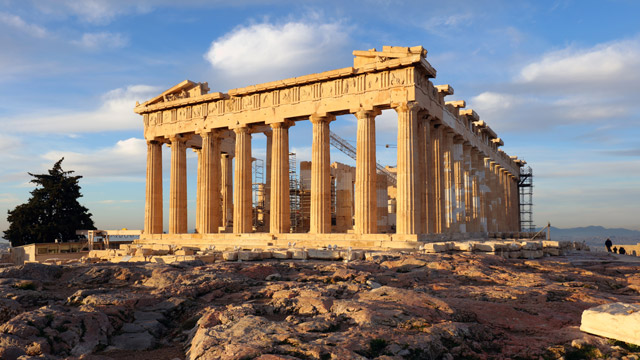
Adapted from TTstudio / Shutterstock.com |