Competition with the Portuguese Empire
|
Portugal was the first European nation to extend its territories overseas in 1415. One of the reasons for this was its location. Portugal sits on the south west corner of Europe, its eastern coast is on the Atlantic Ocean while its southern coast is very close to North Africa. At that point in time, the south of Spain was still being ‘reconquered’ from the Moors (North African Muslims who had been there for 700 years) by the Christian Kingdoms of Castile and Aragon. Portugal had completed this process within its own territories by 1249. By 1415 when an expedition was launched to Ceuta, a wealthy city just across the Straits of Gibraltar in modern Morocco, Portugal was a well-established state. Caravans carrying silks and spices from the East and others carrying gold and slaves from the interior of Africa converged at Ceuta. The invasion had the blessing of the pope, who was interested in reducing Muslim territory, and the support of the nobility who were interested in furthering their own wealth. Having established a toe-hold in Africa it was not long belong before expeditions were made further south under the direction of Prince Henry, who was nicknamed ‘The Navigator’. 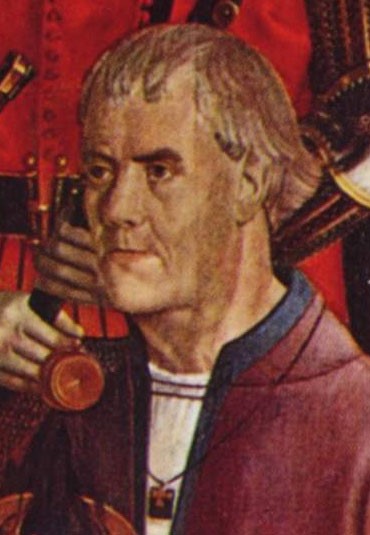
Nuno Gonçalves, public domain. Accessed 30 March 2021 In 1488, Captain Bartolemeu Dias reached the Cape of Good Hope at the bottom of Africa. After 73 years of exploration and settlement along the Atlantic coast of Africa, the Portuguese Empire had become wealthy enough to mint gold coins; cruzados. Finding a sea route to India around the bottom of Africa multiplied this wealth several times over. Portuguese ships made the first voyage to India in 1492. |