The Reconquista
|
In the year 711 Muslim forces from North Africa invaded the Iberian Peninsula incorporating the whole into the Umayyad Caliphate from the Mediterranean to the Pyrenees Mountains. Over the course of 780 years, the Christian kingdoms of the north waged an intermittent war against the Muslim emirates and gradually regained the lost territories. It is important to realise that the Reconquista was not just one continuous battle and that relations between the groups was complex and not always hostile. The kingdoms of Christian Spain were not united and there were several cases of Muslim forces fighting alongside Christian forces against common enemies. 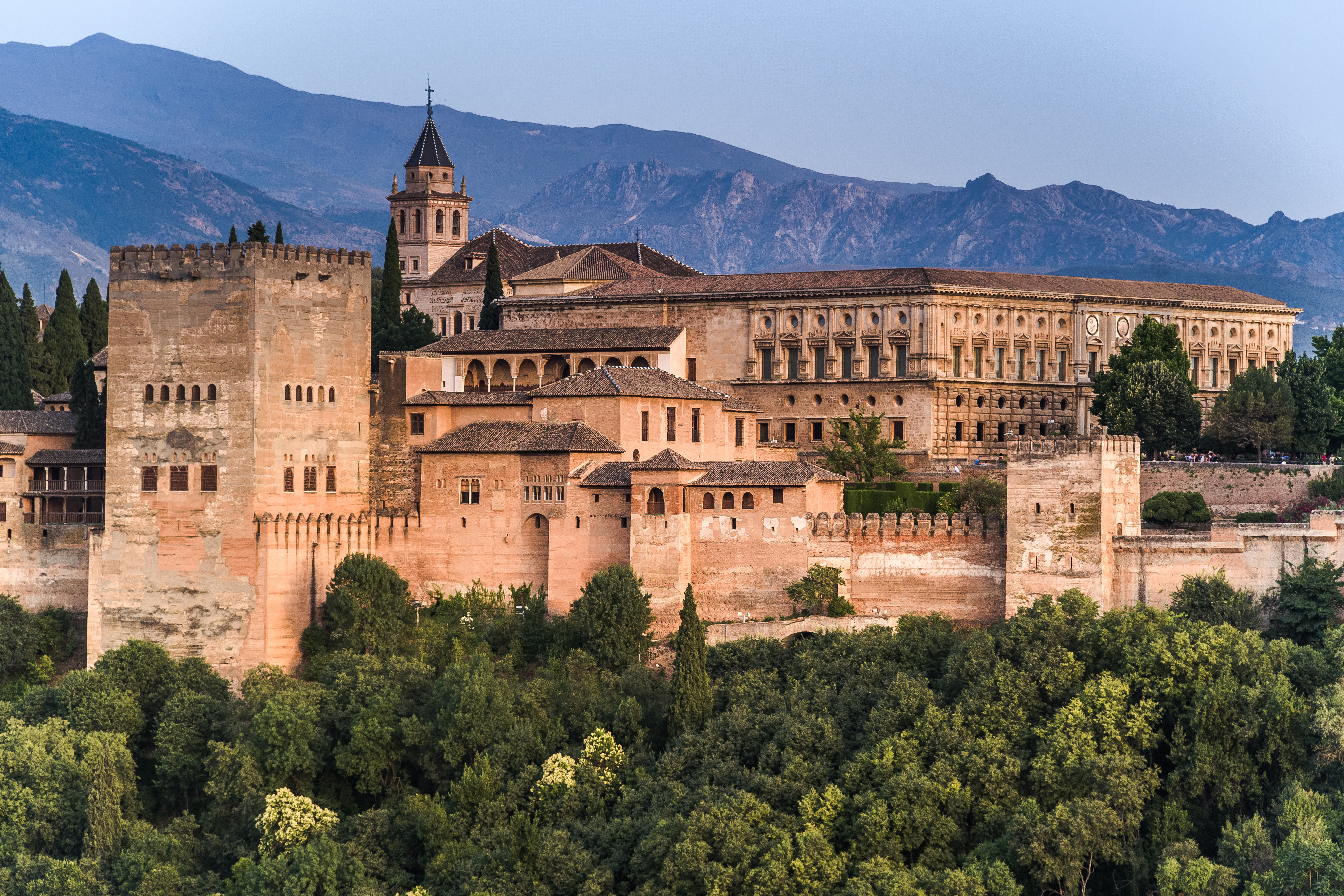
Granada. Sabino Parente / Shutterstock.com One of the effects of the Reconquista was that the kingdoms of Spain became welded to the Catholic Church. Every kingdom in Western Europe at this time was officially Catholic but the Iberian Peninsula was a cockpit of armed religious struggle. The church directly supported the Spanish armies and the fight had a crusader mentality. Another effect was that the Spanish kingdoms had an unusually large proportion of military leaders and experienced soldiers. The Reconquista ended in 1492 leaving a lot of capable men kicking their heels with no gainful employment. That was a dangerous combination. The Christian kingdoms were not united and civil war was a clear and present danger, regardless of the fact that Queen Isabella was the dominant monarch when there was a general belief that men had a natural right to be in charge. The war to take Granada had been incredibly expensive. Castile had done most of the heavy lifting (the other major player being the kingdom of Aragon) and incorporated Granada into its own territory but it had been left short of cash. Exacerbating the situation was the fact that Isabella and Ferdinand decided to remove the Jewish inhabitants of Spain as a whole, by giving them two options; either convert to Christianity or go elsewhere. The Jewish population of Spain was large, perhaps 200,000 at this time and they played a prominent role, among other things, in financing the activities of the monarchs. Ferdinand and Isabella fully expected that most would convert but this turned out not to be the case. Although figures are sketchy, possibly more than 70,000 Jews left, forced to leave anything of value to the crown. Ironically, a significant number moved to North Africa and became pirates who attacked Spanish shipping. The solution to all of these issues was to find a national venture that would provide a common goal under the leadership of Castile and the Church that would generate new revenues for the Crown. Luckily, the Spanish had a clear model to follow in their next door neighbour; Portugal. |