The Spanish Empire
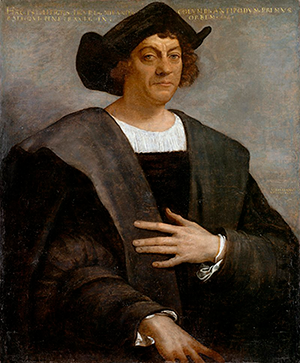
Metropolitan Museum of Art (CCO 1.0 Universal). Accessed 12 March 2021. Welcome to the Spanish Empire. Most of us are familiar with the name Christopher Columbus, due in no small part to his perceived importance to American history and the prevalence of American narratives in our own culture. Columbus, so the story goes, discovered America in 1492, opening the way for the establishment of the English-speaking United States. The story with regard to Columbus, generally ends there as a footnote to the development of the USA. This approach is however problematic on several levels. Firstly, Columbus never set foot on the North American continent. He did not give America its name and was not even the first European to arrive (that honour goes to the Vikings who had established settlements in Newfoundland, Canada, 500 years earlier). It is entirely plausible that the Portuguese had beaten him to the New World by discovering Brazil first but Columbus was the first recorded European to reach the islands of the Caribbean and claim them for Spain. This gave birth to an empire that eventually stretched across the Atlantic from the west coast of North Africa to Florida and all the way across to California and then onwards over the vast expanses of the Pacific Ocean to the Philippines, across the Indian Ocean to the east coast of Africa and the Persian Gulf. The Spanish Empire was the first to claim itself as ‘the empire on which the sun never sets'. Spanish language and cultural influence is prevalent around the globe from South America where Spanish is the lingua franca (except for Portuguese in Brazil) or the Philippines which has over 83 million Catholics. |