What is an ecosystem?

Adapted from VectorMine / Shutterstock.com |
|
An ecosystem is a geographic area where plants, animals and other organisms, as well as weather and landscapes, work together to form a bubble of life. |
|
We know that all Earth's ecosystems together form the biosphere. But living things can be studied at different levels, from a single organism to a population, community and ecosystem. In ecology (the branch of science that studies ecosystems):
The environment is the surroundings of an organism, including the physical and chemical environment, and other organisms with which it comes into contact. While the environment is where organisms live, the ecosystem is the community where the living (biotic) and non-living (abiotic) elements interact with each other. You can think of an ecosystem as a chain of interactions between organisms and their environment.
The key to understanding an ecosystem is understanding the interactions that happen between all the organisms, features and factors present in the environment. 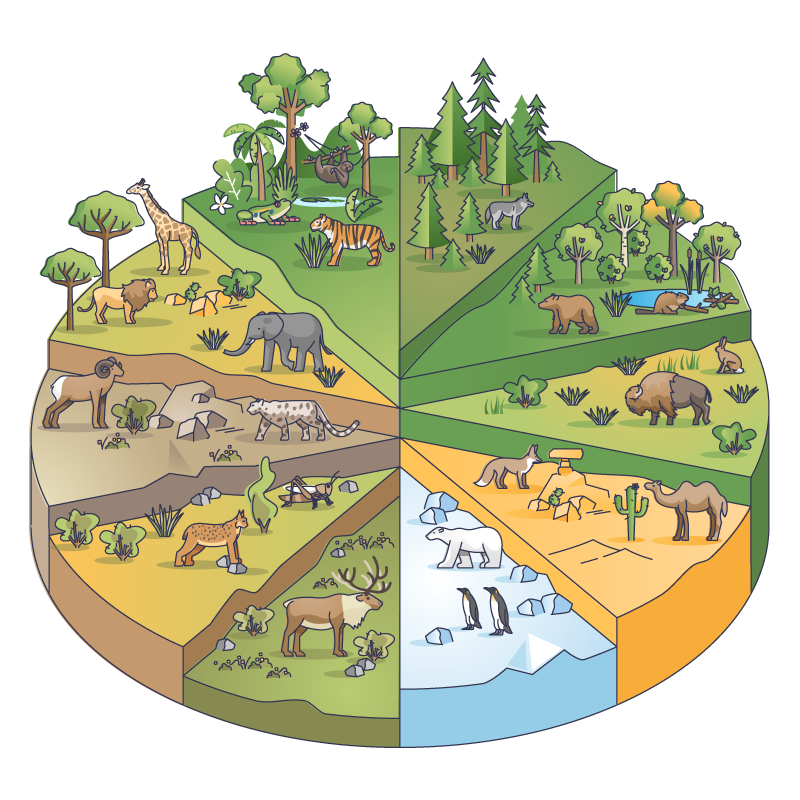
VectorMine / Shutterstock.com Ecosystem: A structural and functional unit of ecology where living organisms interact with each other and with the surrounding environment. An ecosystem is an open system, meaning the energy and components can flow through the boundaries of the ecosystem (e.g. migrating animals). |
|
Watch the following video, answering the questions as you go. |