What is an ecosystem?
Biotic and abiotic factors
|
As we know, organisms and communities are supported by the Earth’s systems of the lithosphere, atmosphere and hydrosphere through interactions between each sphere. And an ecosystem is a biological community of interacting organisms and their physical environment. Let's learn a bit more about the living (biotic) and non-living (abiotic) factors that make up ecosystems.
|
||||||
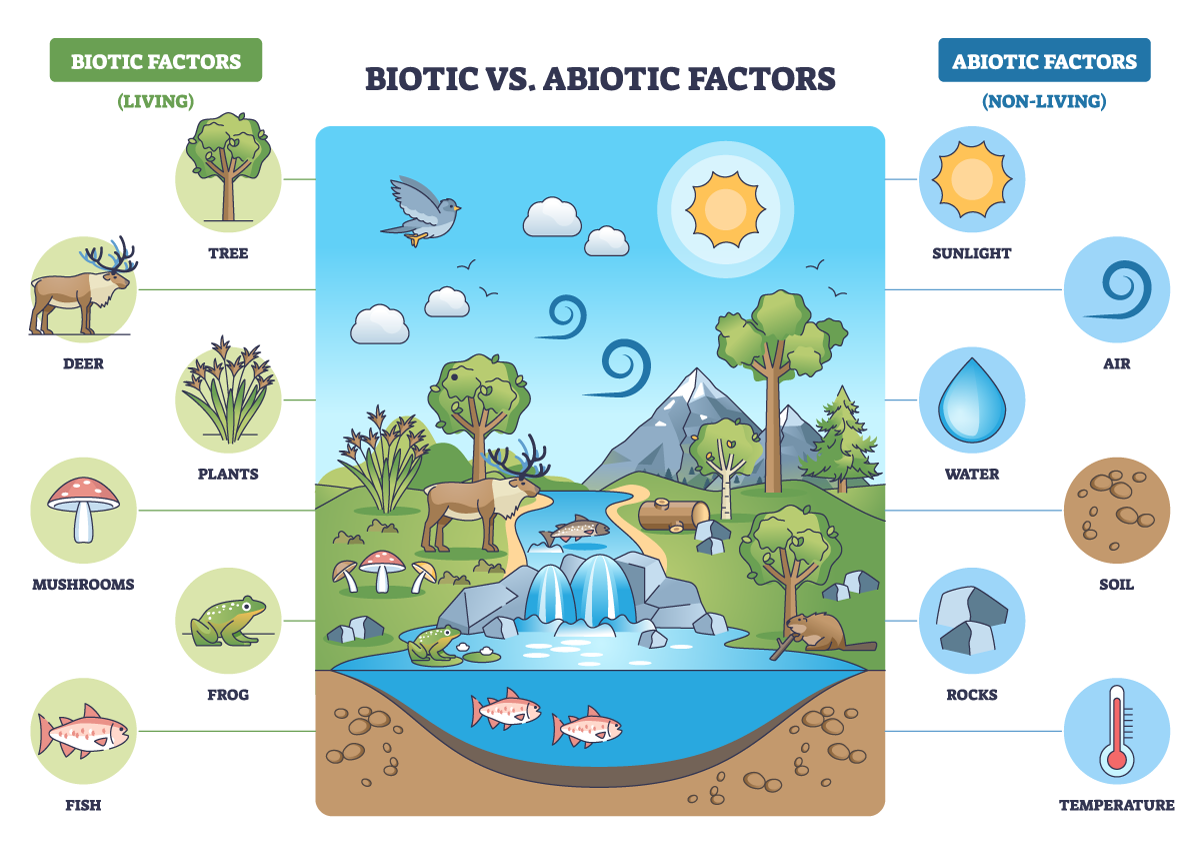
VectorMine / Shutterstock.com |
|
Watch the following video on biotic and abiotic factors and how they interact on The Great Barrier Reef. |
|
Drag the different living and non-living things listed below into the correct box to check your understanding of the terms biotic and abiotic. |