International laws about climate change
Law #2: Paris Climate Agreement (2015)
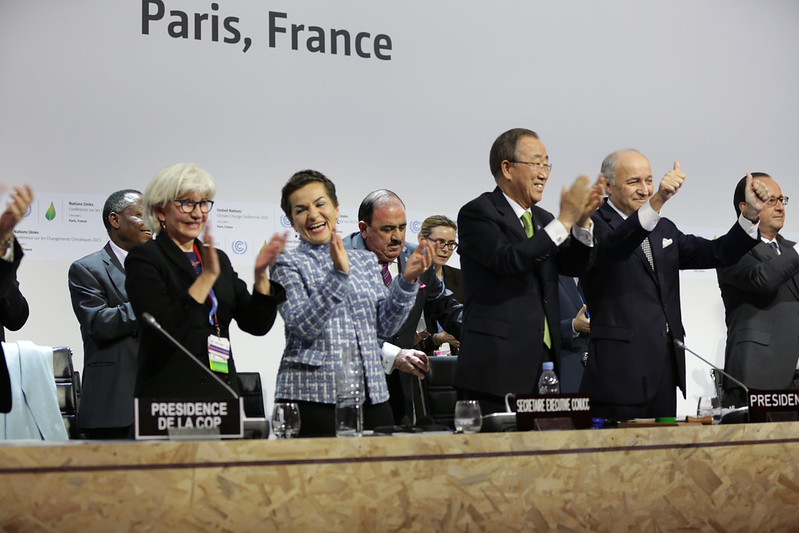
UN Climate Change/James Dowson (CC BY 2.0). Accessed 28 August 2026. The Paris Agreement is legally binding international treaty is response to climate change (UNFCCC, 2026). It was negotiated at the 2015 COP15, in Paris France. These negotiations were lead by the world’s two largest emitters of CO2 – the US and China. The PCA is groundbreaking in that it found a way to satisfy the concerns of both developing and developed states, by building in the flexibility of Nationally Determined Contributions (NDCs). The PCA addresses the following areas of climate change;
Major provisions of The Paris Agreement include; Article 2 (Temperature goals)Party states will participate in the following; a. Holding the increase in the global average temperature to well below 2°C above pre-industrial levels and pursuing efforts to limit the temperature increase to 1.5°C above pre-industrial levels, … [to] reduce the impacts of climate change c. Align financial flows with low-emissions, climate-resilient development [ie. assist developing states who have not benefitted from CO2 emitting devlepment, to develop in low-emissions ways] Summarised from page 3, The Paris Agreement Articles 3 + 4 (Nationally Determined Contributions - NDCs)Article 3. Party states are to undertake and communicate ambitious efforts Article 4. Party states are to set economy-wide absolute emission reduction targets Summarised from pages 3-4, The Paris Agreement Article 9 (the Financial Mechanism)1. Developed country Parties shall provide financial resources to assist developing country Parties. Summarised from page 13, The Paris Agreement Who isn’t party?
|
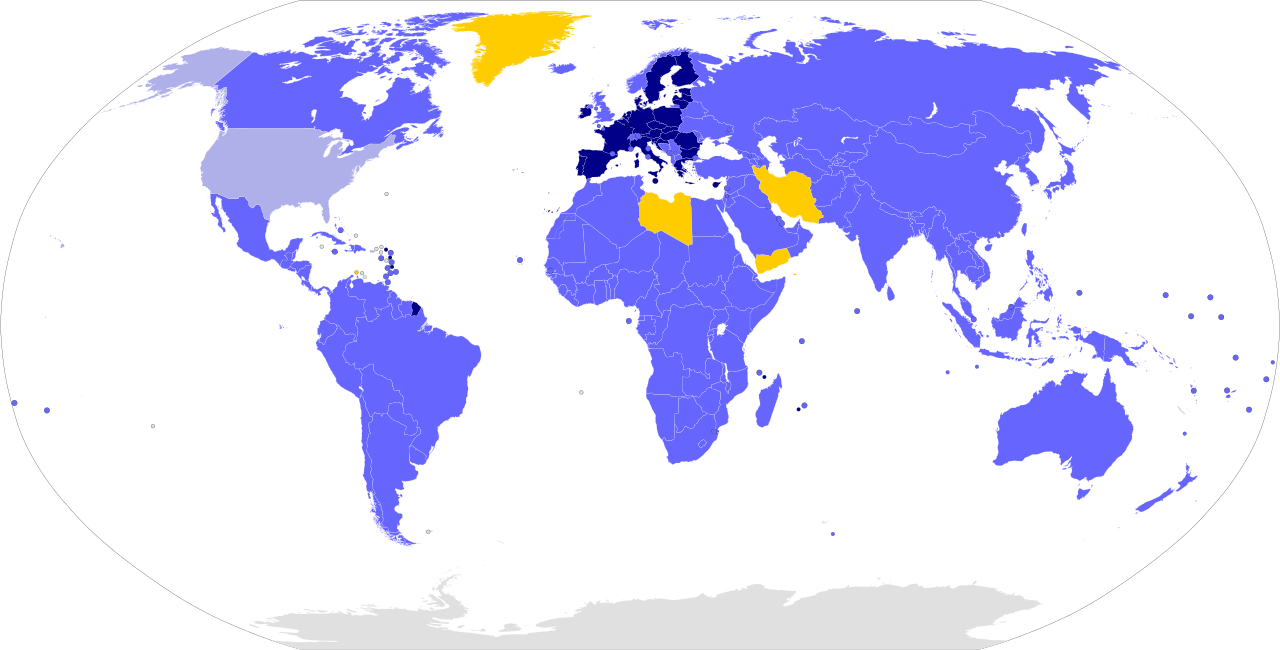
Signatories Parties Withdrew Parties also covered by EU ratification L.tak (CC BY-SA 4.0). Accessed 31 August 2026. |
|
Take notes as you read the articles linked below:
Include in your notes:
Note: This is just the beginning of our study of global actors’ responses to climate change. |