International laws about climate change
Law #1: UN Framework Convention on Climate Change (1992)
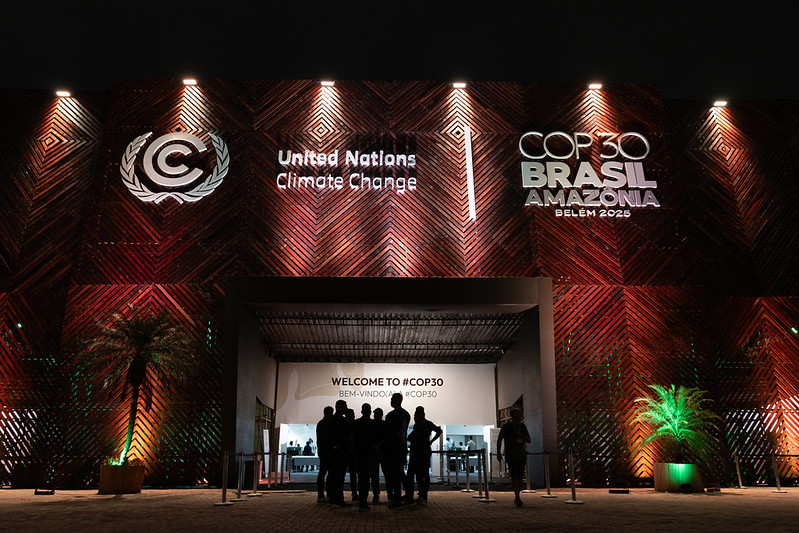
UN Climate Change - Kiara Worth (CC BY-NC-SA 4.0). Accessed 28 August 2026. The UN Framework Convention on Climate Change was adopted by the UN in 1992, and is a multilateral treaty that acknowledged climate change a global issue that needed a cooperative response to resolve. Major provisions of the treaty include; Article 7 (The Conference of Parties)A Conference of Parties (COP) is hereby established [that will]… 2. Review the implementation of the Convention… seek to mobilize financial resources… Review reports submitted 4. Be held annually 6. [allow] the UN, its specialized agencies, and the International Atomic Energy Agency … [and] any body or agency, whether national or international, governmental or non-governmental, which is qualified in matters covered by the Convention… may be represented at sessions of the Conference of the Parties as observers Summarised from pages 10-12, UN Framework Convention on Climate Change Article 4 (Commitments)1. All Parties shall: a. Develop, periodically update, publish and make available to the COP, national inventories of anthropogenic emissions c. Promote and cooperate in the development …[and] transfer, of technologies, practices and processes that control, reduce or prevent anthropogenic emissions d. Promote and cooperate in the conservation and enhancement…of sinks and reservoirs of all greenhouse gases [ie. forests] f. Take climate change considerations into account in their social, economic and environmental policies and actions 5. The developed country parties shall…facilitate and finance, the transfer of, or access to, environmentally sound technologies and know-how to other Parties, particularly developing country Parties (NOTE: COP15 in Copenhagen in 2009, developed states agreed to contribute $US100 billion each year to support developing states with climate mitigation and adaptation) Summarised from pages 5-8, UN Framework Convention on Climate Change |
|
Take notes of specific facts, statistics and quote you could use in your writing about COP and the UNCCC in action as you read the articles linked below:
Include in your notes:
|