What is international law?
|
International laws are the wide range of rules and norms (conventions) that are designed to govern the actions of states in international relations, including treaties, declarations, bilateral and multilateral agreements and even decisions made by bodies such as the United Nations Security Council. Many international laws are codified, meaning written down, but some are not. International laws aim to promote a rules-based system, cooperation and accountability particularly in areas that transcend national borders, such as armed conflict, trade and human rights. For example, some international laws that regulate how states must behave in armed conflict are:
States can choose to sign up to international laws, making them a signatory state. When a state then passes its own domestic laws to make the international law enforceable in its territory, it is said to be party state. For example, the Ottawa Treaty bans states from laying anti-personnel landmines, meaning landmines designed to be triggered by a person walking on foot. Landmines are considered unethical because they are indiscriminate weapons that continue to harm civilians long after a conflict has ended. They do not distinguish between soldiers and non-combatants, and they often injure or kill children and civilians returning to their homes years or even decades later. Landmines also cause lifelong injuries, overwhelm health systems and prevent communities from farming or rebuilding safely. Therefore in 1997, states came together to establish the Ottawa Treaty. Below is a map illustrating which states are parties, signatories and non-signatories to this international law. |
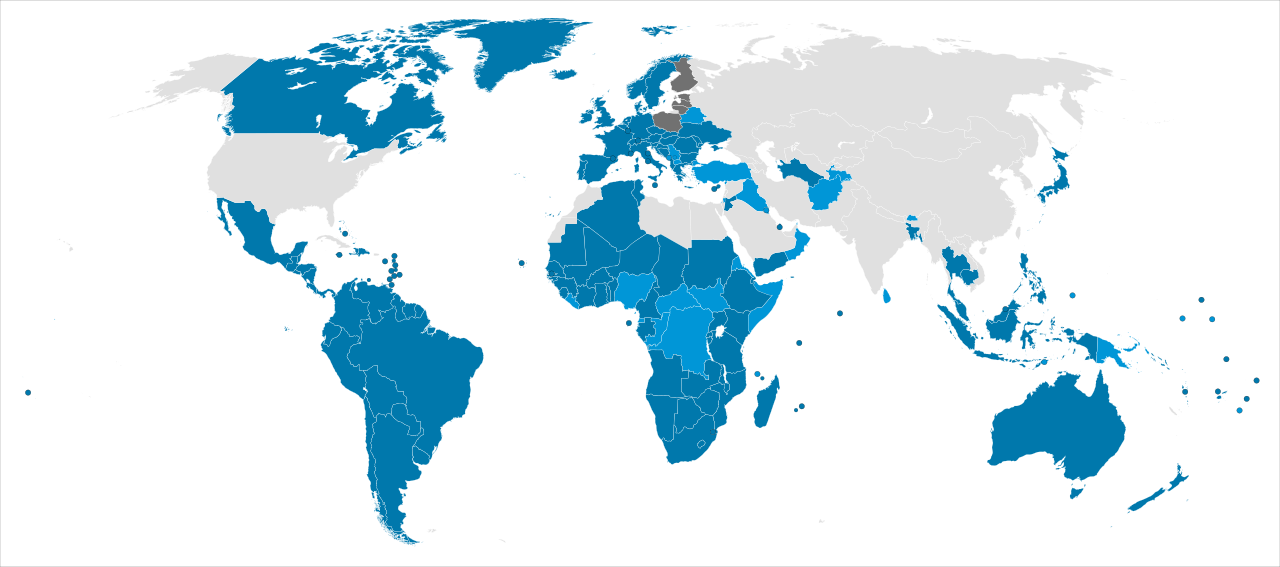
Signed and ratified Acceded or succeeded Withdrawn Ottawa Treaty members by odder, public domain. Accessed 28 August 2026. |