Causes of climate change
Cause #2: Deforestation and land-use change
Adapted from Maria Pilar / Shutterstock.com |
|
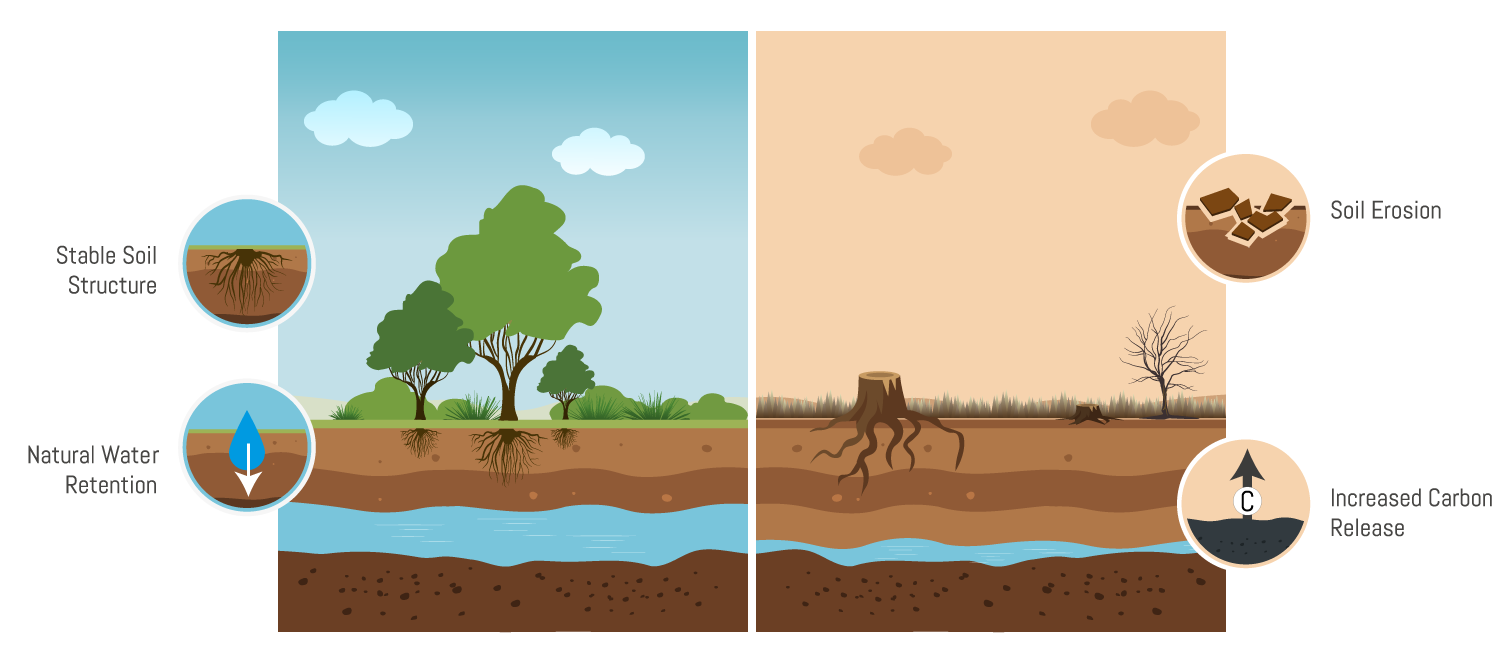
Trees absorb CO2 from the atmosphere through the process of photosynthesis, making large scale forests ‘carbon sinks’. Forests store carbon in the trunks, branches, leaves, roots, and soils of vegetation, often for centuries. Deforestation, meaning a change from a forested to a non-forested state, results in the release of that stored CO2 into the atmosphere, contributing to climate change. The main driver of deforestation is agricultural expansion, although infrastructure building, logging, and wildfires also contribute. Although deforestation rates have slowed in states which have adopted policies to protect and reinvigorate forests, global deforestation rates are still considered by scientists and non-state actors who measure deforestation, to be worryingly high. World Wildlife Fund deforestation researchA ‘deforestation front’ is a term used by the non-state actor the World Wildlife Fund (WWF) to describe regions where deforestation is currently concentrated and accelerating, or at imminent risk of large-scale deforestation, not places where forests were cleared long ago. The WWF focusses on sites including;
WWF deforestation research uses the Hansen/GFW measure to estimate annual forest loss. This detects tree canopy cover at 30m tall, and uses remote spatial technology to plot “change from forest to non-forest state” (WWF, 2021) Case Study: the Amazon Rainforest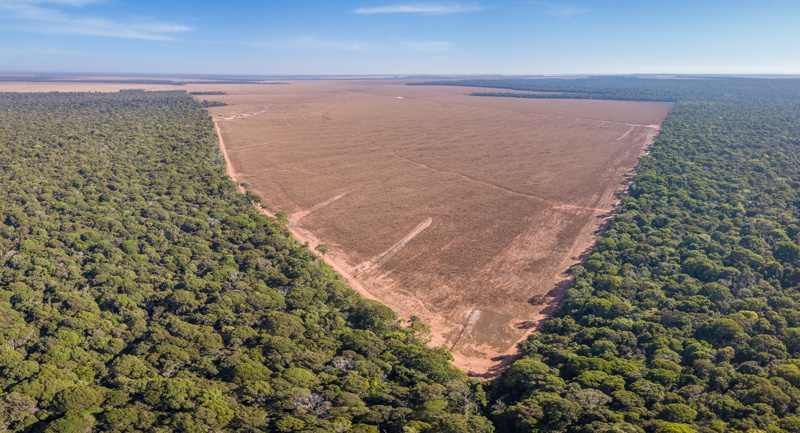
PARALAXIS / Shutterstock.com Some key facts on Amazon deforestation According to the WWF’s Deforestation Fronts Report (2021)
|
|
Download the WWF’s “Deforestation Fronts” Report (2021) and navigate to p.31, Table 3.1 ‘Analysis of drivers from 24 deforestation fronts’. 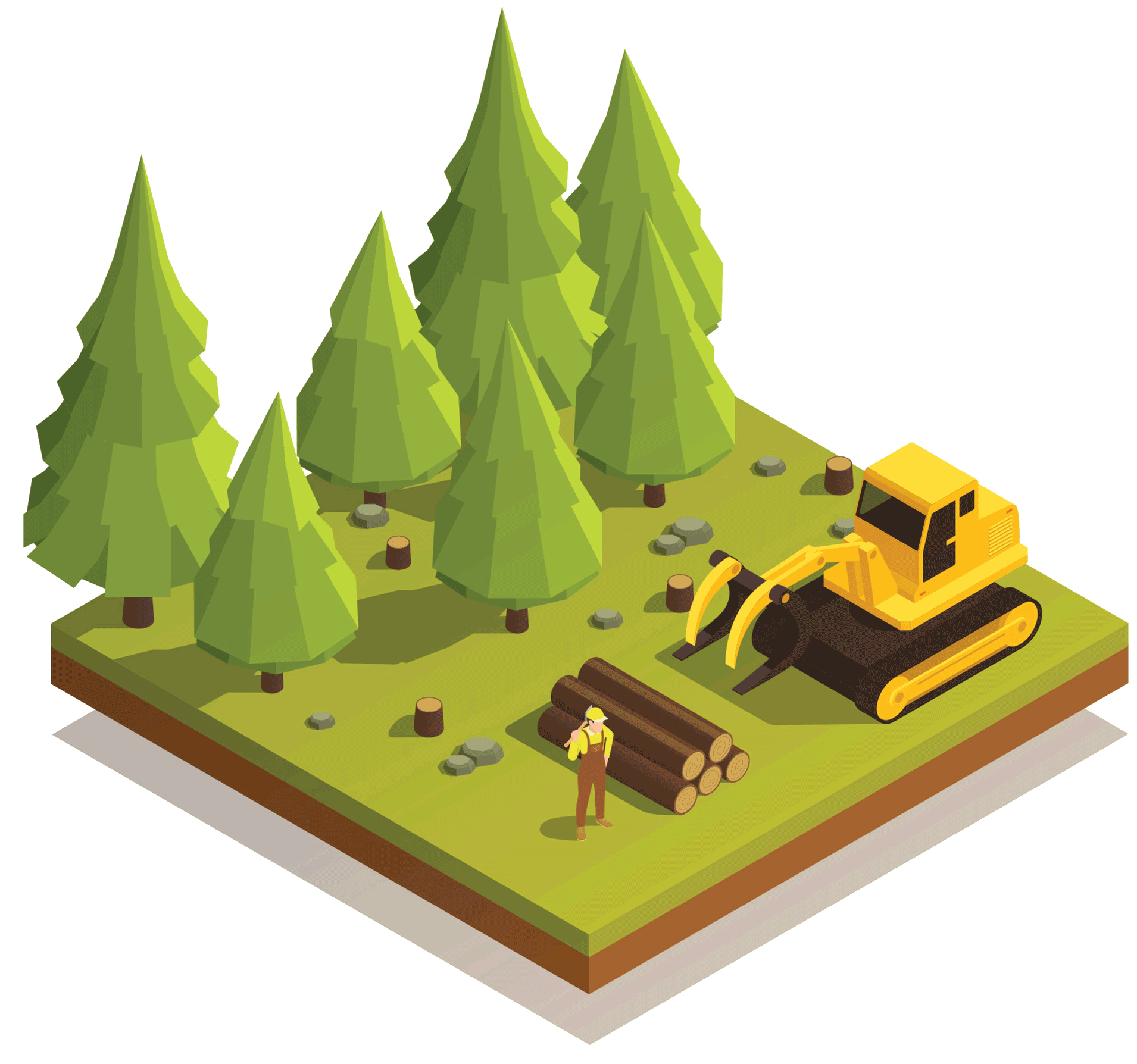
Adapted from Macrovector / Shutterstock.com Add the following to your notes:
|