Generations
Silent Generation (1928–1945)
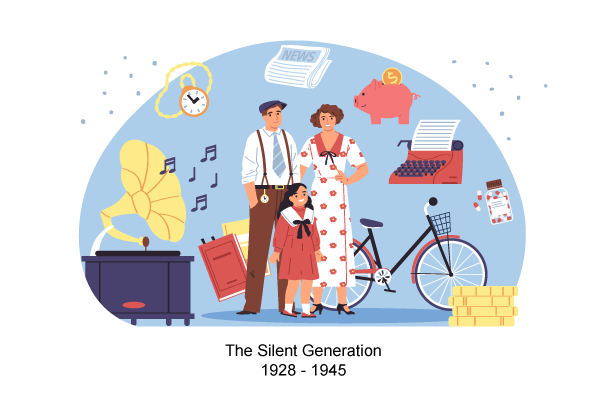
Adapted from Macrovector / Shutterstock.com Your great-grandparents might have been part of this generation, but perhaps you don't know much about it. Click on each heading below to learn about the experiences of people living in this period. Historical contextThe Silent Generation grew up during a period of significant economic and global upheaval. Some were born during the Great Depression (1929–late '30s), while others spent their childhood or teenage years living through World War II (1939–45). These experiences of economic hardship and global conflict shaped their outlook on life and their perspectives on stability and security. Traditional valuesThe Silent Generation often embraced traditional values that were prevalent during their upbringing. These values included respect for authority, loyalty to family and country, and a strong emphasis on maintaining social norms. Social changeAs they witnessed the civil rights movement and other societal changes, some members of The Silent Generation had to navigate the tension between their traditional values and the evolving demands for equality and social justice. Economic changeThe post-war era brought economic prosperity and opportunities for education and career advancement. Many in the Silent Generation benefited from these opportunities and contributed to the growth of industries and economies. Technology and communicationThe Silent Generation experienced the transition from more traditional forms of communication to the rise of television and telephones. While they adapted to these changes, they didn't grow up with the same level of technology as subsequent generations. In summary, the Silent Generation emerged from a challenging historical context and many of its members developed values of hard work, resilience and traditionalism. Their contributions to society, commitment to community involvement and impact on intergenerational dynamics have left a lasting imprint on the world we live in today. |