KGC - Spatial association
|
Spatial association is the degree to which two or more phenomena are similarly arranged over space. Spatial association compares distribution patterns and the interconnections between them; for example, the distribution of high altitude and vegetation communities such as alpine tundra. A strong spatial association occurs where the distribution of two phenomena are very similar. On the contrary, weak spatial associations mean there is little similarity between the distribution of phenomena. VCE Geography Study Design, p.8 © Victorian Curriculum and Assessment Authority. |
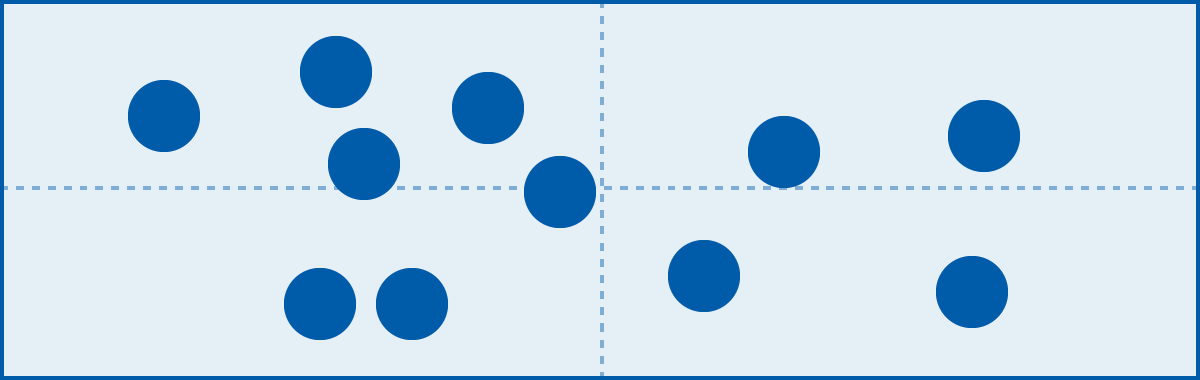
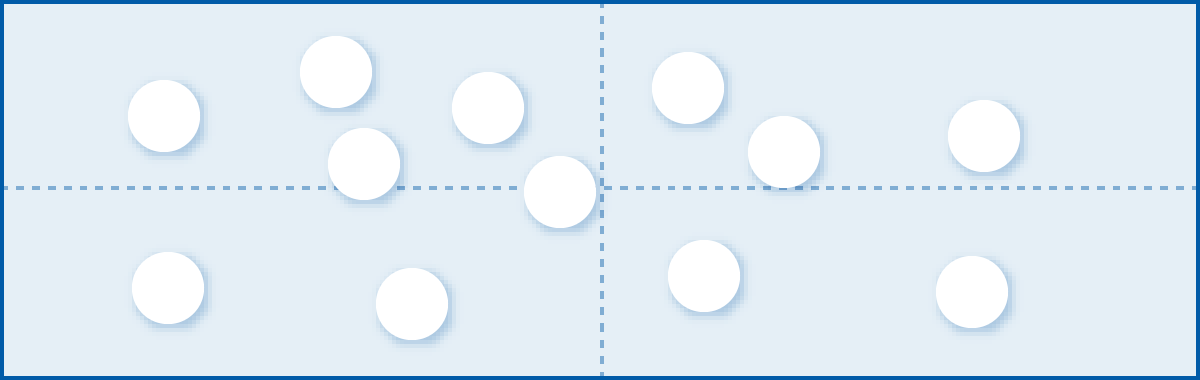
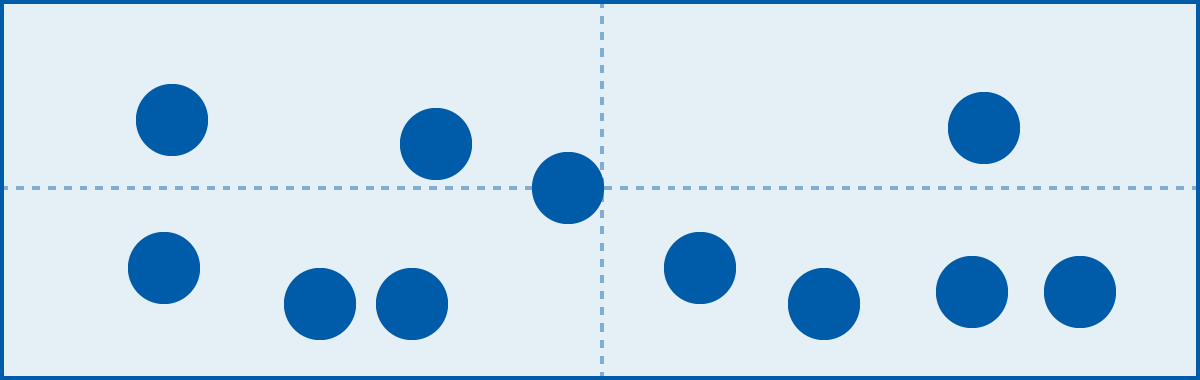
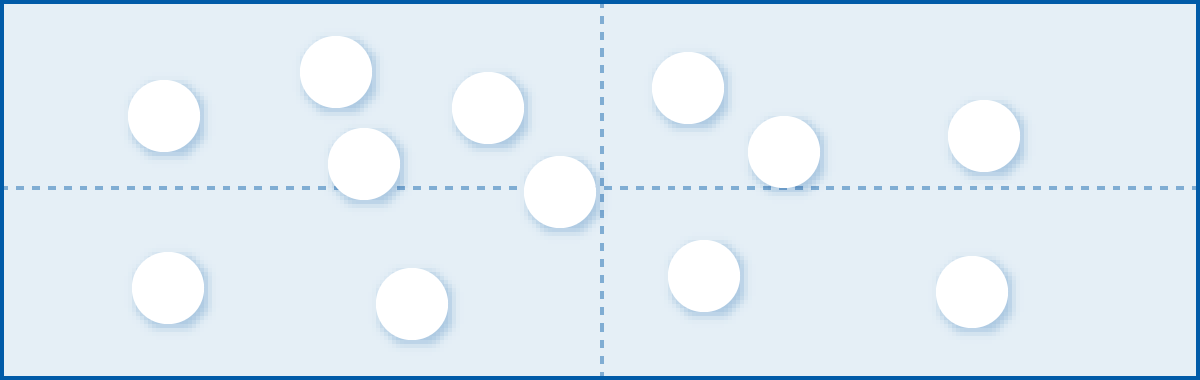
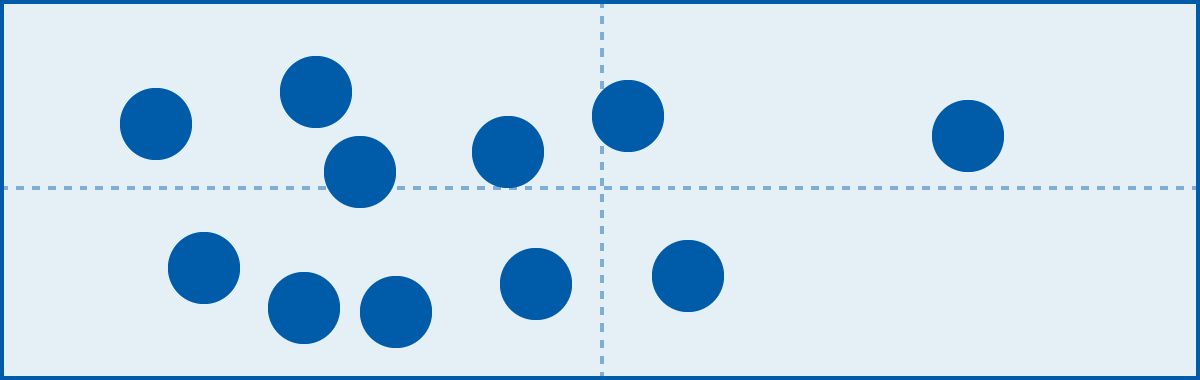
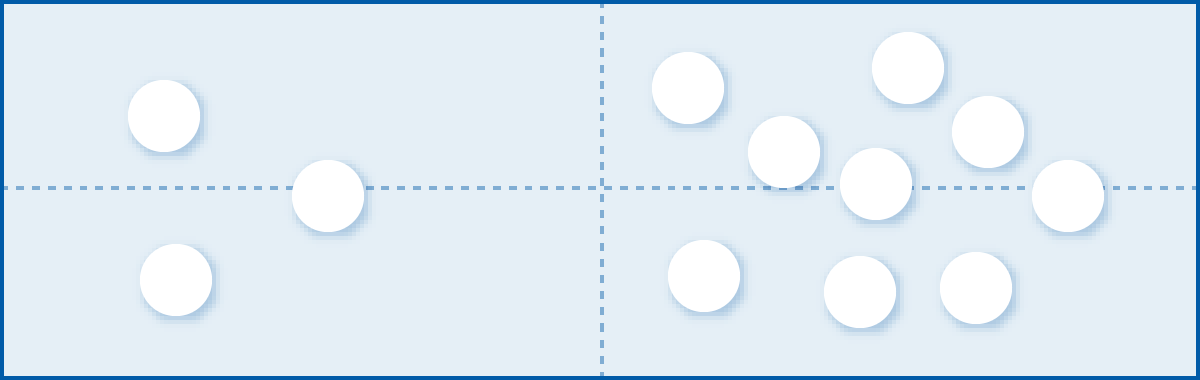
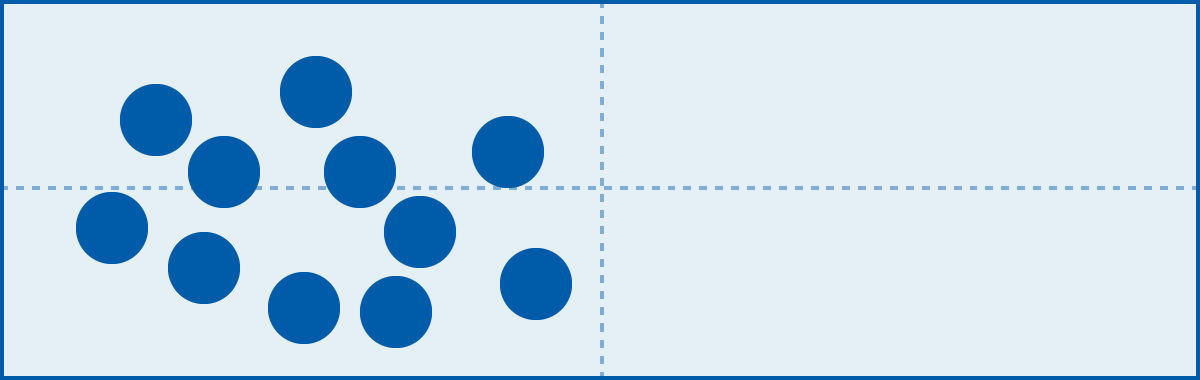
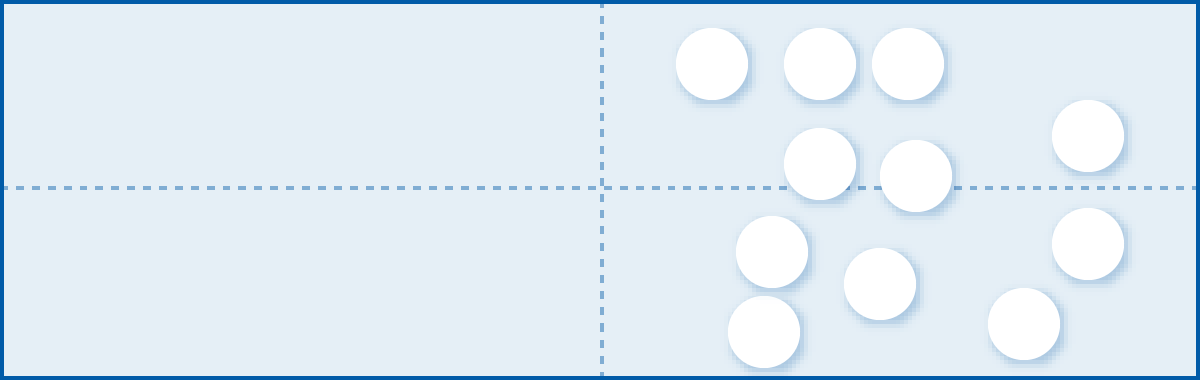
Understanding spatial associationSpatial association is the degree to which two or more phenomena are similarly arranged over space. Therefore, when identifying and describing spatial association, geographers compare distribution patterns and the interconnections between them. We use strong / moderate / weak / no when identifying the degree of spatial association. The following diagrams compare the distributions of blue and white dots. Strong spatial association occurs where two distributions are very similar.
Moderate spatial association occurs where there are some similarities and some differences.
Weak spatial association occurs where there are a few similarities but more differences.
No spatial association occurs when there are no similarities.
Source: The above text is adapted from the VCE Geography Study Design, p.8 © Victorian Curriculum and Assessment Authority Describing spatial associationWhen describing the spatial association between two or more distributions:
|