Sample sonnet: 'Sonnet 33' by Elizabeth Barrett Browning
Taking a closer look at 'Sonnet 33'
|
One of the key things to consider when looking at a sonnet is the way the author has used punctuation. Sometimes the author's intention is to have the reader pause at the end of every line for effect or emphasis. Sometimes it is easier to read a poem, or a piece of blank verse, if you gently emphasise the last word on every line and follow the punctuation instead. Using the annotation steps introduced in Week 1, let’s have a closer look at the way the first six steps apply to the Barrett Browning sonnet. The annotation is reproduced below, or you can download your own copy. Did you use the pro-tip when reading the sonnet? If so, what did you notice, and what might you add to the example below? Specifically, what could you say about the use of punctuation? |
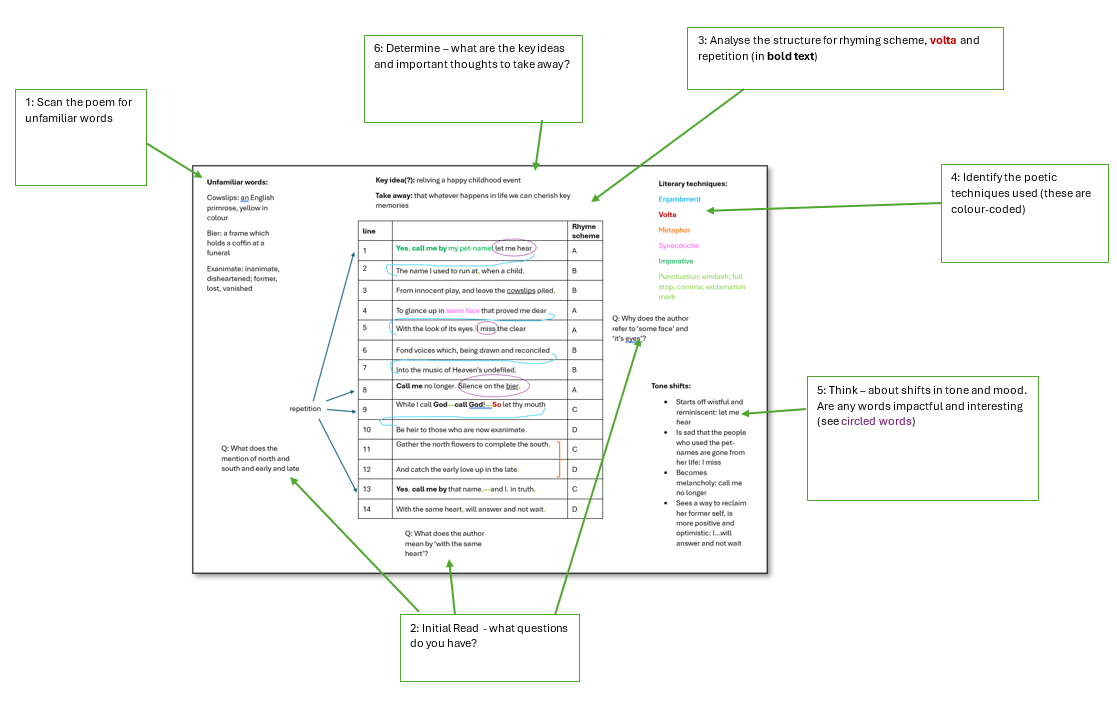
© State of Victoria (DET) Virtual School Victoria, 2026 |
Writing about a poemHere is one way to write about the poem. What do you notice about the use of metalanguage, and structure? Sonnet 33 explores the author’s request for her beloved to call her by her childhood nickname as it reminds her of a happier time in her life. The first word of the sonnet indicates that the speaker is responding to a request by her beloved, and she is consenting to being called by this pet-name – not a nickname, which can be given by anyone in her life, but a special name from childhood. The first quatrain shares the speaker’s happy memory of hearing this pet-name as a child. The second quatrain completes the octet by sharing the speaker’s sadness at missing those who called her by this name. There is a hint that perhaps death may not be the reason in line 10. Notice the use of punctuation in this sonnet. It seems to indicate a range of emotions displayed by the speaker, from the encouragement in the first line, to the sadness at being separated from those who used this pet-name during the speaker’s childhood. The full stops are used sparingly and seem to indicate the conclusion of key points or ideas. The use of the em-dashes in lines 9 and 13 emphasise an action and perhaps indicate a sense of urgency. The final six lines – the sestet – encourages the speaker’s beloved to carry on the tradition of using the pet-name and states she will not wait to respond to it. |