Introduction to the sonnet
Why sonnets?Good question! Basically, even if we are unfamiliar with the term sonnet, we likely already know something about this type of poem. For example, you probably know this line from Shakespeare: 'Shall I compare thee to a Summer’s day?' (Sonnet 18). You might even know the opening line from a Christina Rosetti sonnet: 'How do I love thee? Let me count the ways.' (Sonnet 43). Or you might have seen the movie 10 Things I Hate About You, in which a character uses a form of poetry to convey the depth of her feelings. In the first Area of Study for Unit 1 Literature, we are going to build on our pre-existing knowledge of sonnets to hopefully create or extend a sense of joy around poetry. 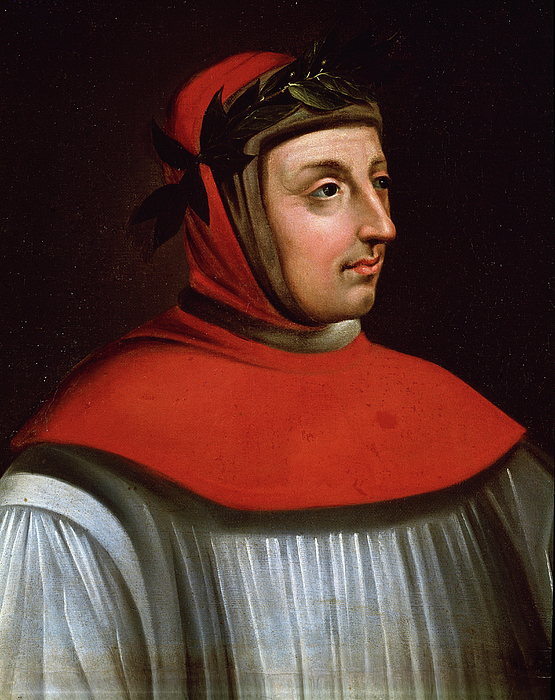
Unknown artist of the French School, public domain. Accessed 11 September 2026. Development of the sonnetThe earliest recorded sonnets were written in the 13th century by Giacomo da Lentini, also known as il Notaro (or the Notary), who was part of the court staff for Emperor Frederick II between 1233–1245. The Italian scholar and poet, Francesco Petrarca, whom we know as Petrarch (20 July 1304 – 19 July 1374) contributed quite a lot to the development of the Italian Renaissance, and Italian poetic and literary language, including the sonnet. Although there were several poets who contributed to the development of the sonnet structure, Petrarch has been credited with perfecting it. Petrarch used this poetic form to write many pieces about a married woman called Laura, whom he reportedly met only a few times, and with whom he was in love, although these feelings were not returned. In fact, the notion of a Petrarchan lover, whose love for another is never wavering and also unfortunately never returned, was named for him. As little is known about Laura, Sonnet 227 (reproduced on the next page), was thought to be a description of her beauty and his realisation that she is beyond his reach. The volta, the turning point, is placed at the start of line 9, where Petrarch tells us of his confusion as he realises that he and Laura are on different paths in life and will never be together. |