Proteins: The four levels of protein structure
|
The four levels of protein structure are: primary, secondary, tertiary and quaternary. Each level builds on the last to give a protein its final shape. What does your hair have in common with the feathers of a sparrow, hooves of a goat and beak of an eagle? They are all composed of a strong, fibrous protein known as keratin. Keratin is just one of an amazing variety of proteins produced from the transcription, RNA processing and translation of a gene. The keratin protein has a quaternary structure. This means it is composed of more than two polypeptide chains. It must successfully fold into its quaternary structure in order to become functional. 
Gary C. Tognoni / Shutterstock.com Virtually everything a cell is or does depends on the proteins it produces. An example of an essential protein is the enzyme tyrosinase. It is part of a biochemical pathway that produces melanin, the pigment responsible for your eye colour. The enzyme tyrosinase is produced when the tyrosinase gene undergoes transcription, RNA processing and translation. Tyrosinase is functional and able to catalyse the production of melanin when it folds into its tertiary structure; this is when the secondary structures bond together to form the 3D shape of the protein. The levels of protein structure are essential in the creation of functional proteins and therefore survival. |
|
1. Videos: There following two videos will help you understand proteins. The first provides an overview of proteins and their components. The second explains the different protein structure levels that a protein can take. Take notes as you watch the videos and answer the questions as they pop up. 2. Image: You will often come across images of proteins, so it’s important to recognise them visually. Consider the image below and, in your notes, draw and label the four levels of protein structure, including the definition of each. |
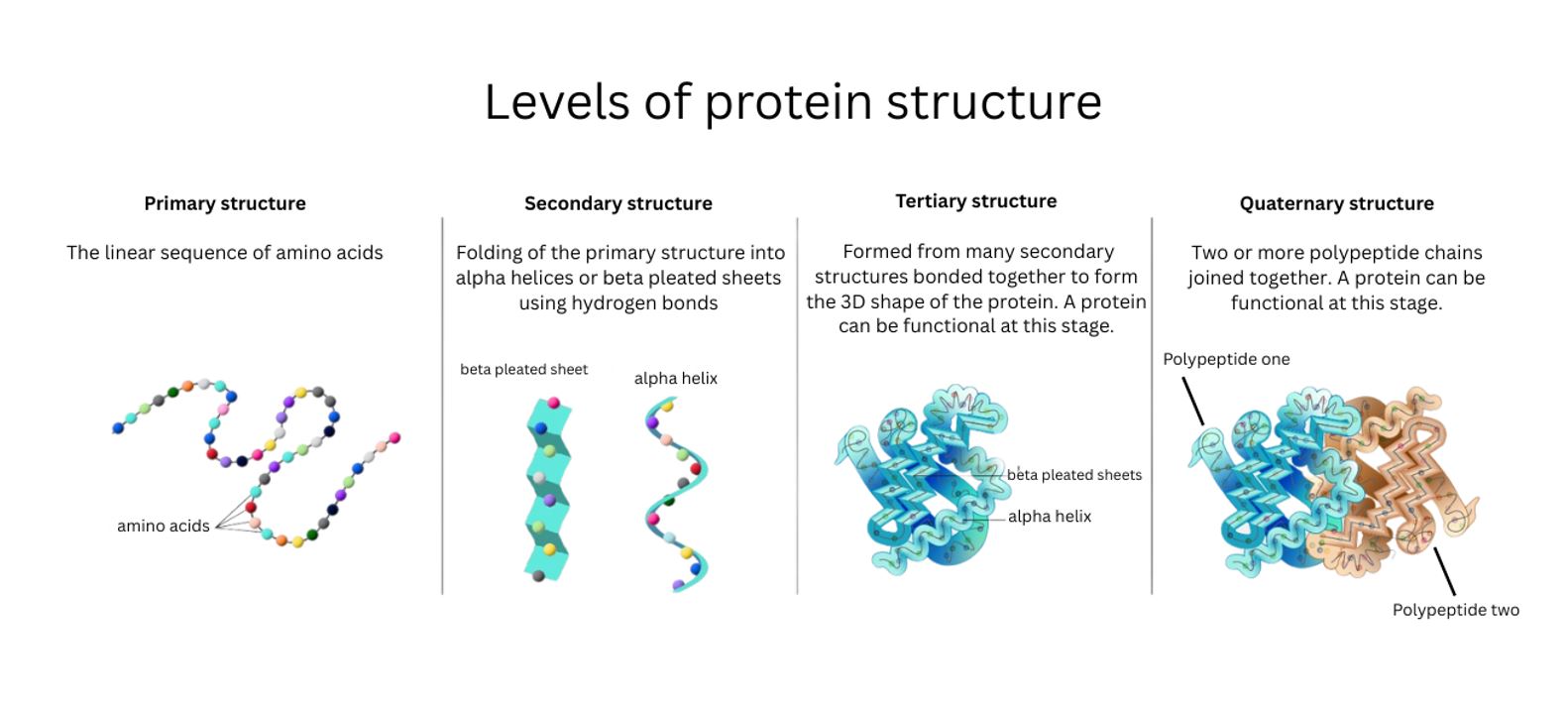
Levels of protein organization by National Human Genome Research Institute, public domain. Accessed 31 August 2026. Image transcriptPrimary structure: The linear sequence of amino acids. Secondary structure: Folding of the primary structure into alpha helices or beta pleated sheets using hydrogen bonds. Tertiary structure: Formed from many secondary structures bonded together to form the 3D shape of the protein. A protein can be functional at this stage. Quaternary structure: Two or more polypeptide chains joined together. A protein can be functional at this stage. |