The 'central dogma' and proteins
|
Now that you know all about nucleic acids, it's time to take that knowledge and move on to discovering how DNA acts as a 'recipe book' in the process of gene expression. Gene expression includes three main processes:
When scientists were searching for the structure of a gene, they investigated both DNA and proteins, because both were abundant in the body. Once they figured out that it was DNA that was carrying genetic information, they then needed to figure out how DNA could code for the making of a protein. Over time, they figured out the 'central dogma' of DNA protein synthesis. The central dogma of DNA protein synthesis: DNA encodes RNA; RNA encodes protein. 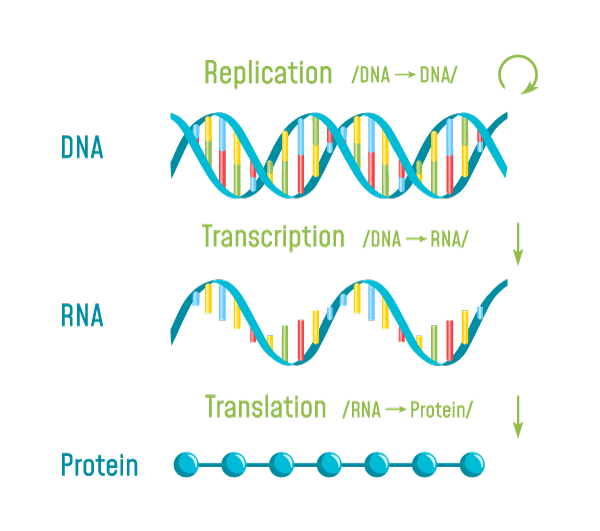
Fancy Tapis / Shutterstock.com The central dogma states that genes contain the sequence of DNA nucleotides, which is copied into mRNA that directs the sequence of amino acids in a protein. Proteins are both structural and regulatory, meaning that they build your body, and they run it. We'll be taking a much closer look at proteins in a couple of weeks. For this week, all you need to know is that proteins are made from strings of amino acids called polypeptides. You can see a polypeptide at the bottom of the central dogma image above; it looks like a string of beads. The process of taking the information stored in genes and making proteins with it is called gene expression. |
|
On a blank page in your study notes, draw a flow chart of the central dogma of DNA protein synthesis (explained above). You will return to this flow chart during the week to add annotations with new information as you learn it. |