Niels Bohr and the arrangement of electrons in shells
Limitations of Bohr's model
|
Bohr's model works well with the hydrogen emission spectrum. However, when scientists looked at the spectral lines of other elements, they noticed more than one line of a particular colour occurred. For example, the emission spectrum for sodium (Na), revealed two yellow-coloured lines. 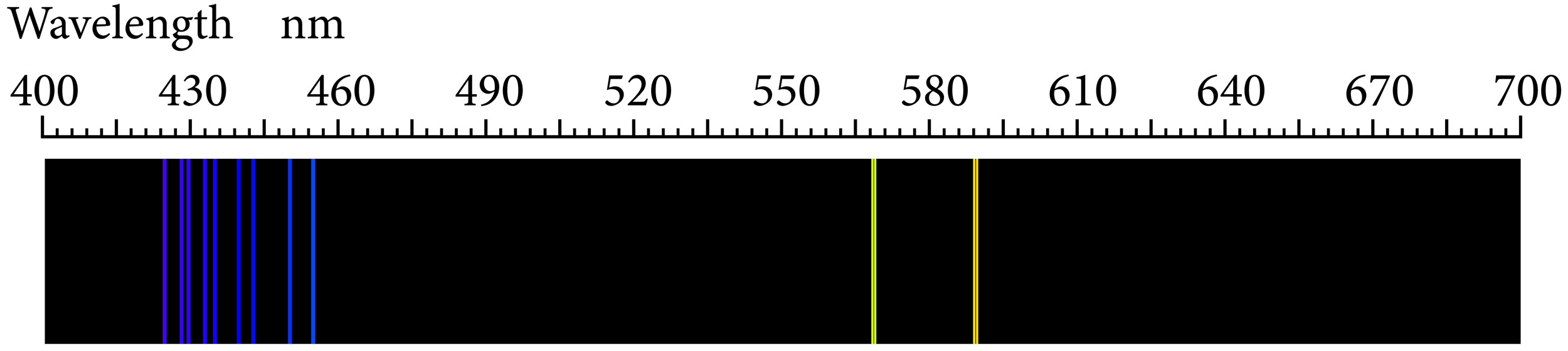
MoFarouk / Shutterstock.com If Bohr's model was correct, an electron moving from one electron shell to the next would result in a single line of each colour, as was the case with hydrogen – not multiple lines of the same colour. Furthermore, when we apply the \( 2{n}^{2} \) rule to determine the number of electrons that can be occupied by the third energy level, we find that although the maximum number of electrons that can be occupied by the third shell (M) is 18, there is another rule: that the outer shell can never hold more than eight electrons. We saw this with the electronic configuration of the elements potassium (2, 8, 8, 1) and calcium (2, 8, 8, 2), whose third shells each had eight electrons and their fourth shell (N), became the outer shell to accommodate the remaining electrons. |
|
Watch the following video to revise your understanding of electronic configuration for the first 20 elements on the periodic table, according to Bohr's model of the atom. Make notes as you watch. |
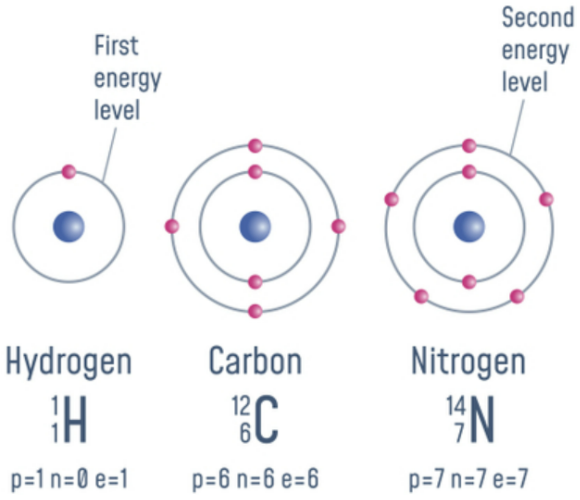
Adapted from: Fancy Tapis / Shutterstock.com |
|
Attempt the quiz to test your understanding. |
ReflectionConsider the periodic table below, specifically the two horizontal elements that are highlighted: calcium and scandium. Scandium has an atomic number of 21 and is located next to calcium, reading across the periodic table. The electron configuration for scandium is 2, 8, 9, 2, while for calcium it is 2, 8, 8, 2. If we follow Bohr's model, the electron configuration for scandium should be 2, 8, 8, 3. Why is that not the case? 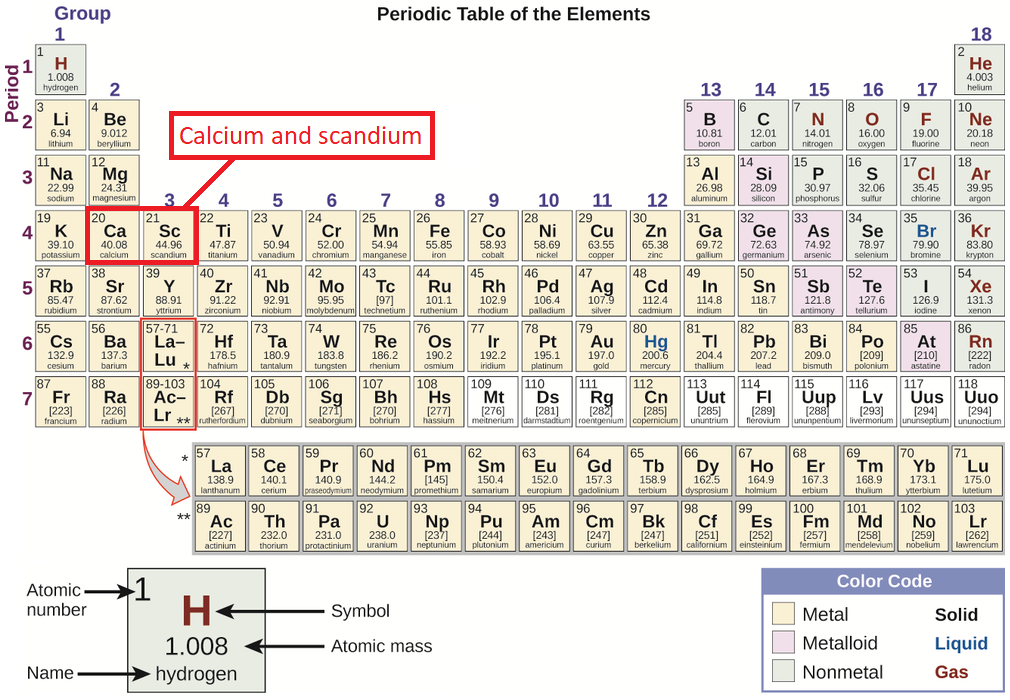
Adapted from OpenStax (CC BY 4.0). Accessed 3 September 2026. In summary, the limitations of the Bohr model were identified as follows:
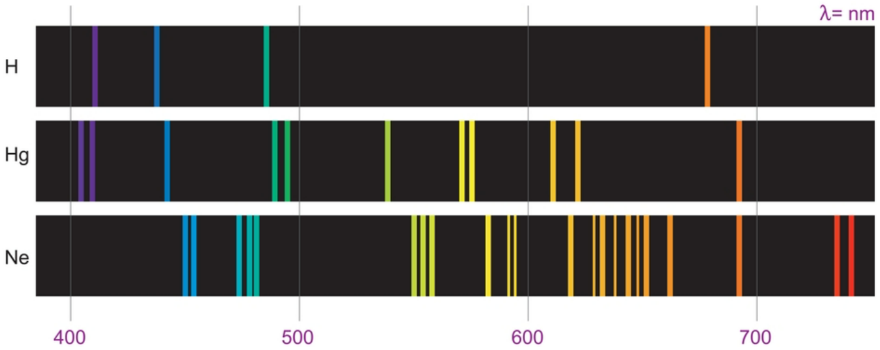
tersetki / Shutterstock.com What came next?The next significant contribution to the model of the atom was made by Erwin Schrodinger, who solved the puzzle of electron arrangement around the nucleus of the atom and overcame the limitations of Bohr's model. Schrodinger's model allows us to complete the electron configuration for scandium and all elements with an atomic number greater than that of calcium. |