Framework of ideas
|
The framework of ideas is used in Units 3 and 4 to provide students with broad ideas to develop their writing. Each idea is aligned with mentor texts for students to study. In Unit 1, we will also use a framework of ideas to provide a general focus for our writing. Its title is ‘Identity and Belonging’.
What is identity and belonging?Questions of belonging and identity are fundamental to being human: ‘Who am I?’, ‘Where am I going?’ and ‘Where do I belong?’ are questions that we ask ourselves every day. Since these questions are so significant in our lives, issues of identity and belonging are the foundations for many texts we read. It is important to consider that identity is not something static. It is something which shifts over time with our experiences and maturity. How do we define who we are?Identity, however, doesn’t exist in a vacuum. Our identity is informed and shaped by the people, groups and things around us. Identity and belonging, for that reason, are almost synonymous. Often, our sense of self dictates who we wish to associate with; such as people who share our values or beliefs. While there are some groups we cannot choose, such as our families and often communities, we can choose our friends and partners, allowing for our identity to exercise power over our sense of belonging. We work out who we are by establishing where we belong. We constantly compare and contrast ourselves with others: Who are we like? Who are we not like? Who do we want to be like? 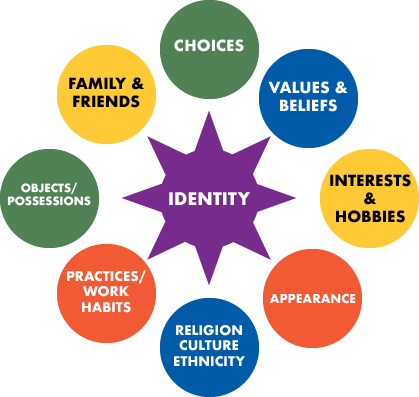
© State of Victoria (DE) Virtual School Victoria 2026. |
||||||||||||