Neurotransmitters
|
© State of Victoria (DE) Virtual School Victoria 2023 How neurotransmitters workNeurotransmitters are chemical substances produced by neurons to transmit messages across the synapse. Each neurotransmitter has its own chemically distinct shape. Once released into the synaptic gap, it searches for – and bonds with – specific receptor sites on the receiving neuron. These sites are designed to match the unique shape of a specific neurotransmitter. In the same way that only the exact matching key can unlock a locked door, only the neurotransmitter that is shaped to fit that particular receptor site is able to bond with it and cause changes to occur to the postsynaptic neuron. A neuron can have many receptor sites of different shapes on its dendrites and may therefore receive several different neurotransmitters. Excitatory and inhibitory effectsNeurotransmitters that successfully bond with their receptor sites have an impact on the postsynaptic neuron. An excitatory effect is when a neurotransmitter increases the likelihood of the postsynaptic neuron firing and sending the neural message on to other neurons. An inhibitory effect occurs with a neurotransmitter decreases the likelihood of the postsynaptic neuron firing and passing on the neural message. 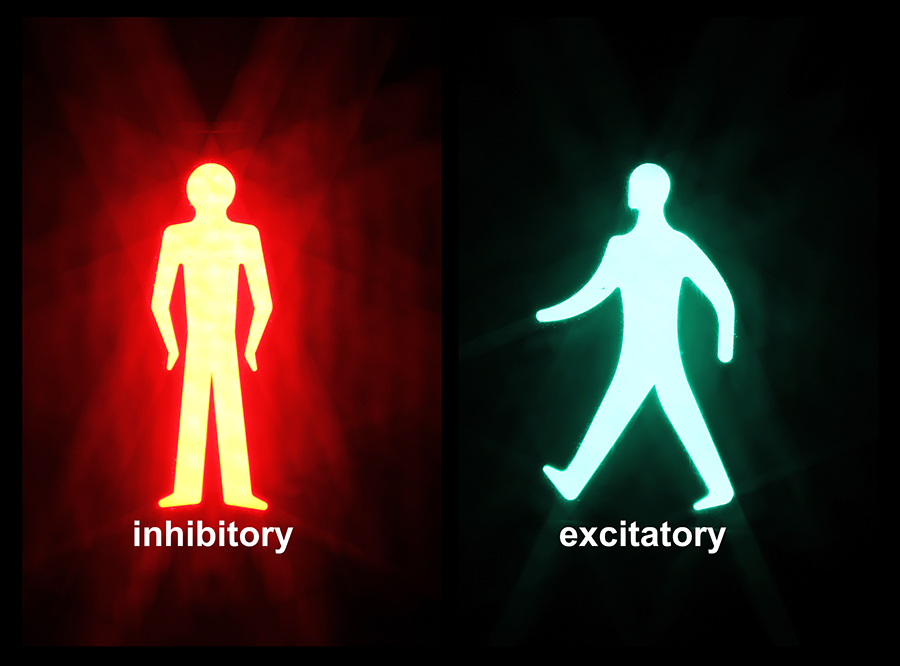
Adapted from Sarin / Shutterstock.com Glutamate is the main excitatory neurotransmitter in the CNS. It plays an important role in memory and learning, including the synaptic changes that help the brain form and strengthen connections. Gamma-aminobutyric acid (GABA) is the main inhibitory neurotransmitter in the CNS. When released, it results in the post-synaptic neuron being less likely to fire. GABA has a role in the regulation of anxiety, arousal and sleep. Low levels of GABA (known as GABA dysfunction) can lead to increased anxiety as there is not enough GABA to adequately counteract the excitatory effects of glutamate. 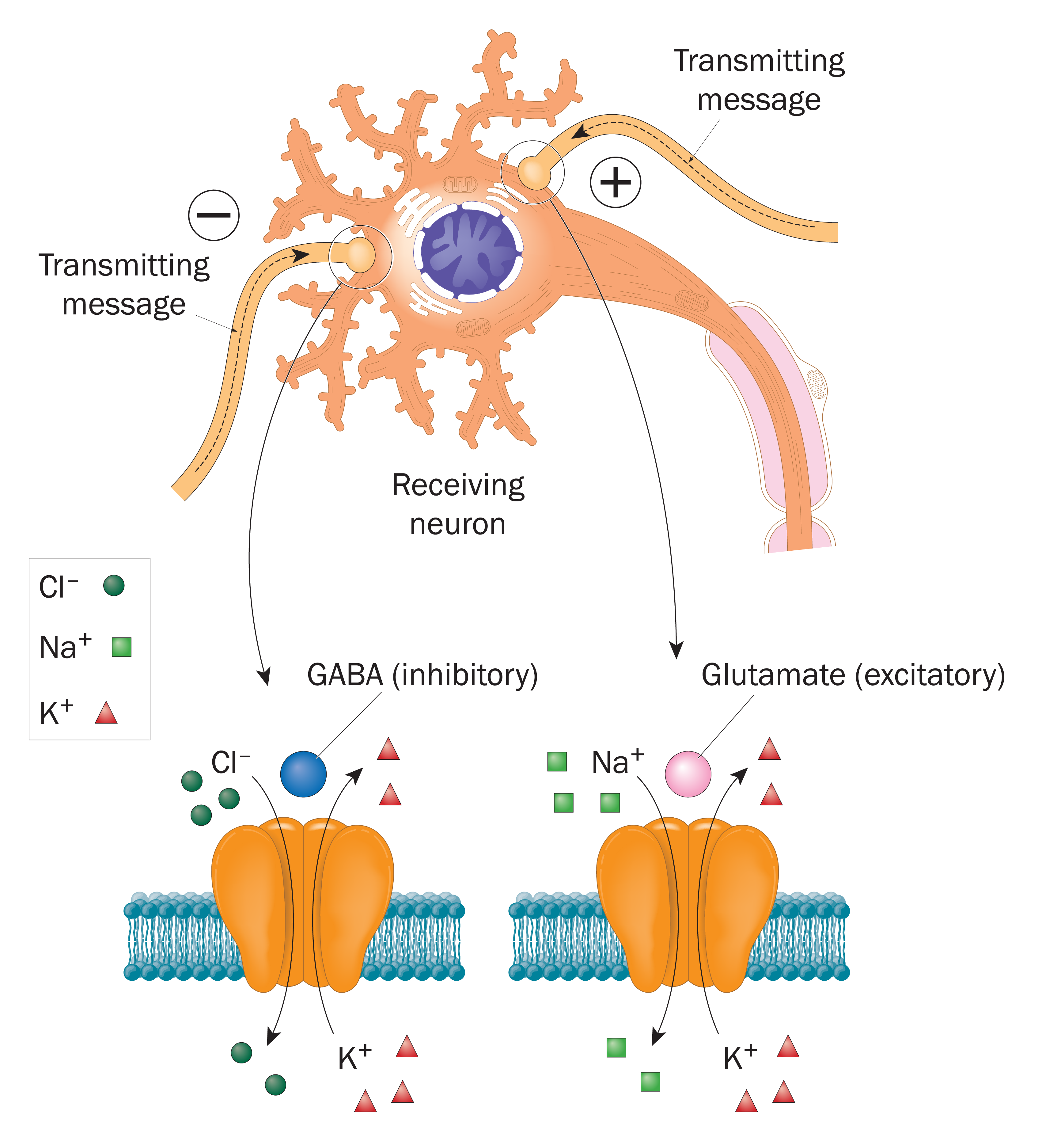
Blamb / Shutterstock.com For a visual representation of neurotransmission, watch the following clip (37 seconds): |