Human nervous system
|
In this course, you can choose to read the text on the page or listen to the audio narration (or listen while you read along) – it's up to you. The audio will appear at the top of each page, like this: © State of Victoria (DE) Virtual School Victoria 2023 |
|
The human nervous system is a complex bundle of neurons (tiny cells that send messages between the brain and body) that allows the brain to communicate with the rest of the body. The brain senses by obtaining information about our internal environment through its connection to the muscles (tissue that controls movement of the skeleton and organs) and glands (organs that secrete biochemical substances into the body) as well as from the external environment through the sense organs (eyes, ears, nose, tongue and skin). Once the brain has processed this sensory information, it is able to coordinate a response by sending instructions to our internal muscles and glands. The human nervous system has two main divisions:
Peripheral nervous systemThe peripheral nervous system can be further broken down into the:
This week we will focus on how the different divisions of the human nervous system respond to, process and coordinate with the sensory stimuli received by the body. |
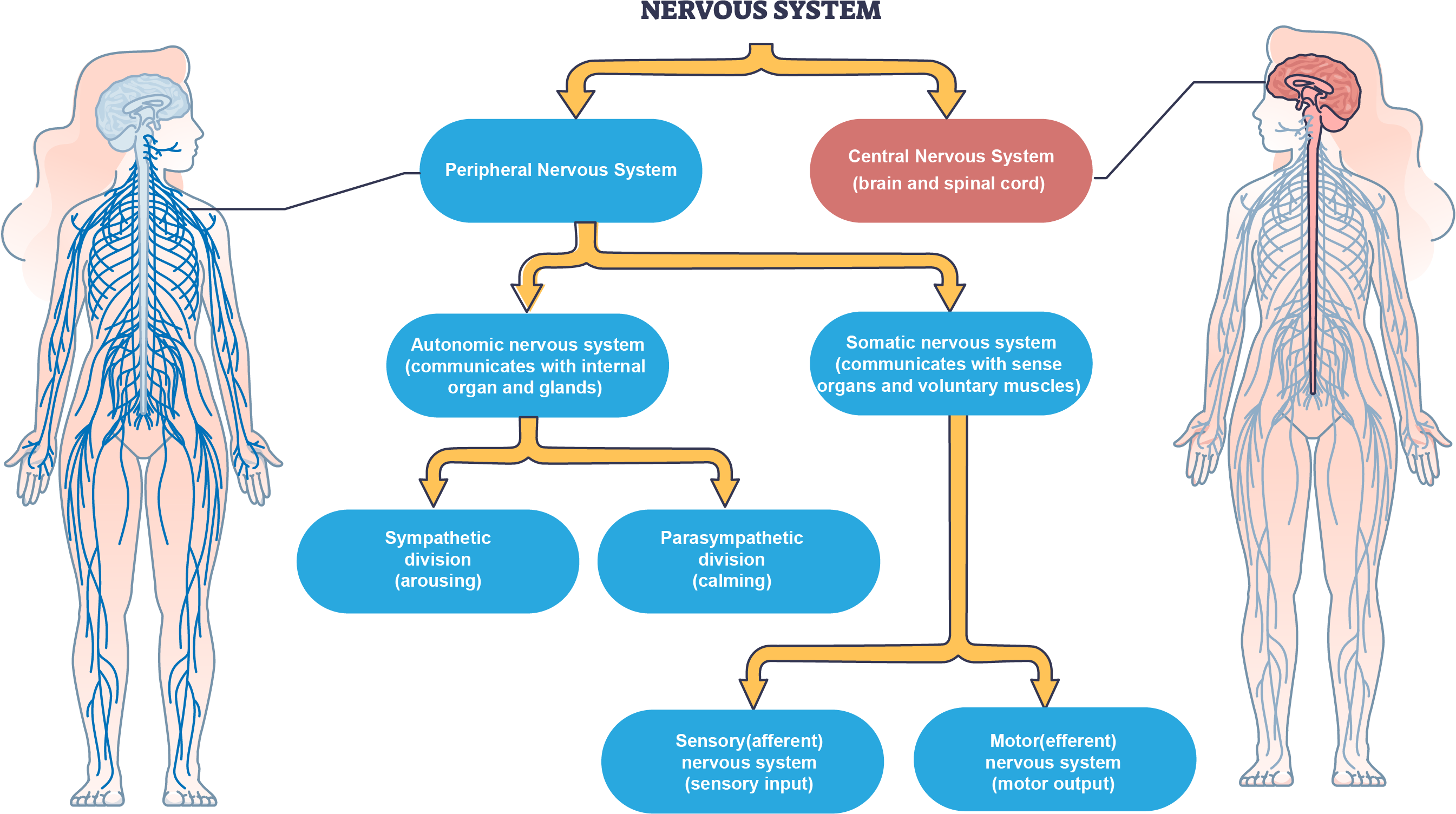
Adapted from VectorMine / Shutterstock.com |