Monophthongs and diphthongs
|
There are two main ways we pronounce vowels. Most consonants, as a general rule, require you to use a combination of lips, teeth and tongue in pronunciation. Whereas in the normal pronunciation of A E I O U your tongue may be moving, but you do not need to move your lips much and teeth do not make contact with your lips. We pronounce vowels by changing the size of our mouth cavity and the position of our lips and tongue. Put on your web cam and have a go at watching the changing shape of your mouth when you say 'me' and 'ma'. Say it slowly and exaggerate your movements (make sure no one is watching – they'll think you've gone mad!). When you say 'me', you will notice that sound resonates from close to the roof of your mouth; this is a high vowel sound. When you say 'ma' – really exaggerate to get the effect – 'maaaaaa' you will notice that your jaw drops lower to let the sound out and your tongue is lowered from the roof of your mouth. Diphthongs are 'long vowels' where we change the movement of our mouths to pronounce what is in effect two vowel sounds in certain words. Try saying these words in a slow and exaggerated way:
You should notice how the vowel 'slides' in pronunciation as your mouth and tongue moves across the vowel. The IPA chart for vowel sounds indicates the different ways you articulate and sound different vowels. This diagram attempts to imitate the intersectional view of the mouth cavity. Again, these do not need to be memorised, so don't worry too much. We will get more into the importance of language and sound in terms of creating meaning a little further on in the course. 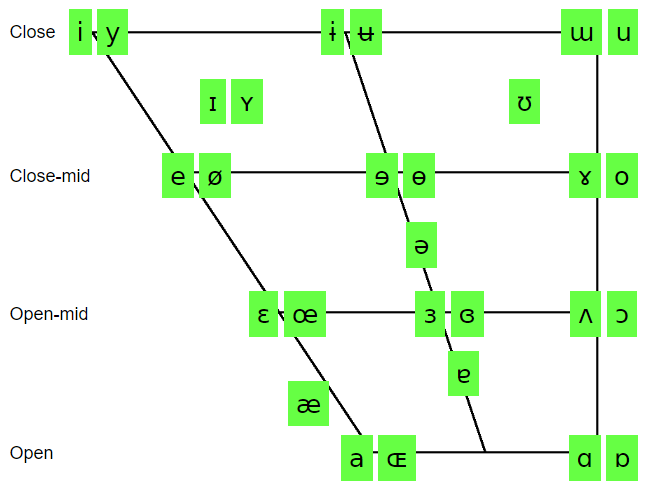
Copied under s113P, Peter Isotalo, https://www.ipachart.com/ You can also use this interactive IPA chart to hear how the IPA vowels are pronounced. Translation examplesExample 1 - IPAsəʊ wɒt duː juː θɪŋk əˈbaʊt ˈɪŋglɪʃ ˈlæŋgwɪʤ? rɪˈsɜːʧ hæz ʃəʊn ðæt ðɪs ˈsʌbʤɪkt ɪz pəˈtɪkjʊləli ˈpɒpjʊlə wɪð ˈstjuːdənts huː laɪk ˈsaɪəns ænd mæθs. duː juː əˈgriː? wɒt duː juː θɪŋk? Example 1 - TranslationSo what do you think about English Language? Research has shown that this subject is particularly popular with students who like science and maths. Do you agree? What do you think? Example 2 - IPAðɪs ɪz əˈmeɪzɪŋ. aɪ hæv ʤʌst faʊnd ən aɪ-piː-eɪ trænsˈleɪtər ˈɒnˌlaɪn. aɪ wɪl ˈnɛvə hæv tuː ˈmɛməˌraɪz ðə ʧɑːt. ænd ɪn fækt aɪ duː nɒt hæv tuː ˈwʌri əˈbaʊt ɪt tuː mʌʧ fɔː ðɪs ˈstʌdi ˈɑːftər ɔːl. θæŋk ˈgʊdnɪs. Example 2 - TranslationThis is amazing. I have just found an IPA translator online. I will never have to memorise the chart. And, in fact, I do not have to worry about it too much for this study after all. Thank goodness. Further examples will be provided once you commence your studies. |
|
Transcribe the following words: Tip sound out the words in their syllables to look for the sounds in the IPA. |