Introducing the subsystems
|
Linguistics has a lot of important language that we need to learn in order to progress through this course. You will find it difficult to believe, but with a little persistence you will soon be using this language fluently and applying it to every aspect of your study. While this metalanguage will seem daunting at first, be patient with yourself. It takes time to learn. This language falls into six main categories that we call 'subsystems'. We will be unpacking these subsystems in the next weeks, and you will be applying this language to a range of written and spoken texts. The subsystems form the language toolbox that will help you to speak, write and analyse texts with greater precision. It is a resource for you to refer back to as you work your way through the course. The six subsystems are:
You will soon see that all these terms are related to form a whole picture of the study of language. The following diagram refers to this relation. 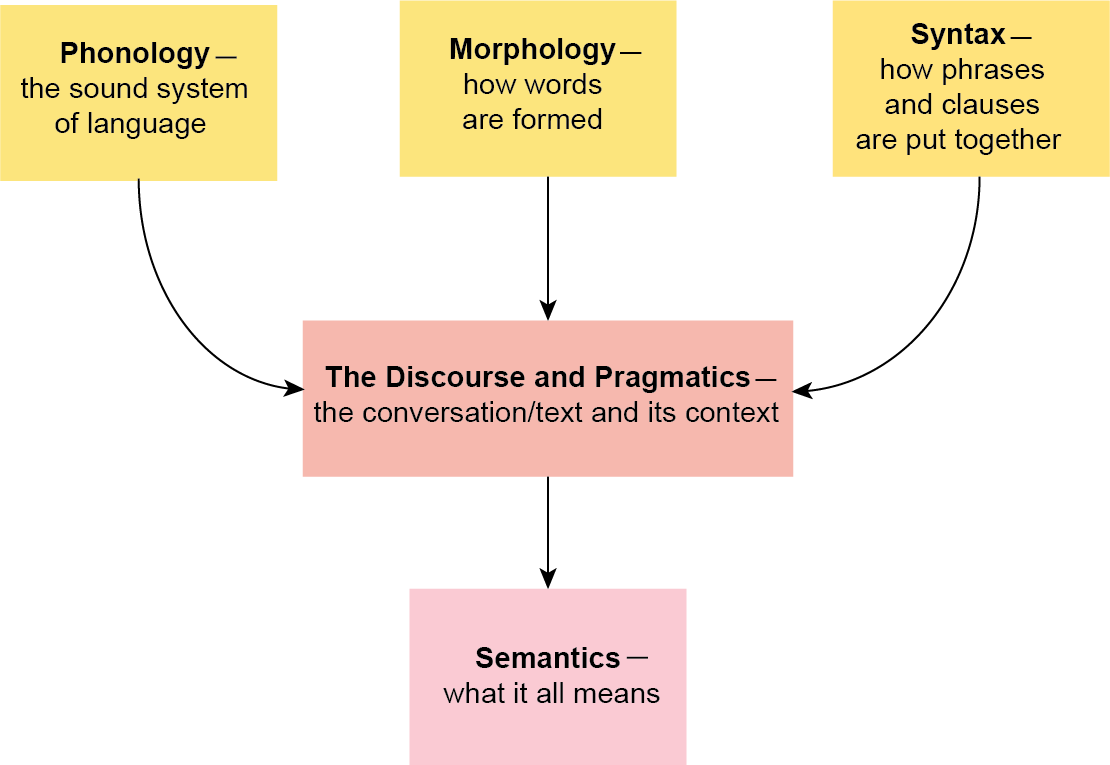
© State of Victoria (DET) Virtual School Victoria 2022. It is important that you see that these subsystems form parts of a whole, because when you come to analyse texts, you will need to bear each of them in mind in order to do the analysis as fully as possible. Over the coming weeks these terms will come to make much more sense. We will be spending time on each section, and if you can try to be patient, hopefully you'll see that this is not as boring as it first appears. In fact, a good knowledge of the subsystems is actually like having a secret key to language, and how it works. You walk through life with this new key, and it will unlock all sorts of interesting insights for you. We will begin with phonetics and phonology – the sounds of English. This study will finish this week's lesson and will continue throughout next week as well. |